

In simple terms, I define quality as a set of characteristics inherent in something that enable it, at the very least, to meet the customer’s expectations. But is this a valid definition, or is there a more appropriate one? Or is there, in fact, no single definition of quality, but rather multiple definitions, meaning its true meaning depends on the context?
💡 Tip: If you prefer to consume this content in a video lesson format, watch our full video below (44 minutes). Alternatively, you can continue reading the article just below.
Definitions of Quality
The articles In The Beginning… There Was Quality and The Eras of Quality provide an overview of the history of quality—its origins, how concerns about it first emerged, and how the concept evolved over time. However, although the pursuit of quality is ancient, defining it as a formal concept is relatively recent.
Among the modern definitions of quality are (but are not limited to):
“Quality is the degree of excellence at an acceptable price and the control of variability at an acceptable cost.”
Robert A. BROH, 1982
“Quality is conformance to specifications.”
Philip Bayard CROSBY, 1986
“Quality is the absence of deficiencies.”
Joseph Moses JURAN,1992
“A quality product or service is one that perfectly, reliably, affordably, safely, and timely meets the customer’s needs.”
Vicente FALCONI,1992
“Quality is anything that improves the product from the customer’s point of view.”
William Edwards DEMING,1993
“Quality is developing, designing, producing, and marketing a product that is more economical, more useful, and consistently satisfactory to the consumer.”
Kaoru ISHIKAWA,1993
“Quality is the correction of problems and their causes throughout the entire series of factors related to marketing, design, engineering, production, and maintenance that influence user satisfaction.”
Armand Vallin FEIGENBAUM,1994
“The totality of requirements and characteristics of a product or service that determine its ability to satisfy certain needs.”
American Society for Quality – ASQ / The American National Standards Institute – ANSI, 1978
“The totality of characteristics of an entity that gives it the ability to satisfy stated and implied needs.”
NBR-ISO, 9000:2000
From these quotes, it becomes clear that the definition of Quality varies depending on the author (or entity). These definitions are not merely “saying the same thing in different words”—they actually convey different ideas of Quality:
- “Satisfaction [of needs]” (ANSI, NBR, and Feigenbaum);
- “Conformance [to specifications]” (Crosby);
- “Improvement and surpassing expectations” (Deming and Ishikawa);
- “Perfection [absence of deficiencies]” (Juran and Falconi).
To understand why the definition of quality varies, we will turn to David Garvin.
The 5 Approach of Quality
David Alan Garvin (1952 – 2017) – one of the more recent ‘gurus’ of Quality – observed that different “groups” understood quality based on their particular interests (meaning different groups with different focuses). However, despite their differing perspectives, certain “themes” were consistently found across those groups. Based on this observation, Garvin concluded that quality could be defined through five distinct approaches: the transcendental, product-based, user-based, manufacturing-based, and value-based approaches. Each approach offers a different definition.
Thus, the “Five Approaches to Quality” were born.
Transcendental Approach
“Quality is neither mind nor matter, but a third entity independent of the two… although Quality cannot be defined, you know what it is.”
Robert M. Pirsig, “Zen and the Art of Motorcycle Maintenance”
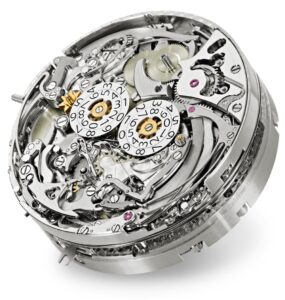
This is Quality as an innate, absolute, and universally recognized excellence. Even without being able to define it, we know when it’s present.
This approach is often linked to fine craftsmanship.
Product-Based Approach
“Differences in quality amount to differences in the quantity of some desired ingredient or attribute.”
Lawrence Abbott, “Quality and Competition”
Unlike the Transcendental approach, here quality is precise and measurable—based on the attributes of the product. For example, a “fine” rug may be defined by a high number of knots per square inch.

User-Based Approach
“Quality lies in the ability to satisfy wants…”
Corwin D. Edwards, “The Meaning of Quality”
Quality is based on meeting the needs of the customer or user (noting that “needs” may vary between users).
Quality is in the eye of the beholder.


Manufacturing-Based Approach
“Quality means conformance to requirements.”
Philip B. Crosby, “Quality is Free”
Quality is defined by meeting the requirements of the production process. If the process or design requirements are fulfilled, there is quality.
“Doing it right the first time” is considered excellence in quality.
Value-Based Approach
“Quality is the degree of excellence at an acceptable price and the control of variability at an acceptable cost.”
Robert A. Broh, “Managing Quality for Higher Profits”
There is quality when a product is “good enough” to meet the user’s needs at an “acceptable price” (cost-benefit).

These definitions were selected by Garvin himself – who conducted his study by observing different interest groups. The authors cited represent those groups.
The Importance of Understanding
Understanding what quality means in a given context is an essential first step before defining performance indicators, setting goals, or launching any continuous improvement initiative. This shared understanding reduces conflicting interpretations and helps ensure that everyone is working toward the same objective.
Its importance goes beyond aligning different areas of the organization. It also helps bring the company’s perspective closer to the expectations of its target audience and customers, reducing the risk of delivering a product or service that is considered “high quality” internally but fails to provide value to those who use it. In addition, understanding how quality is being approached makes it easier to select the most appropriate tools and methods for each situation, leading to more consistent and effective improvement efforts.
So, What Is Quality?
Returning to the definition we opened this article with — quality as “a set of characteristics contained in something that enables it, at minimum, to meet consumer expectations” — we can now place it more precisely. It sits primarily between the product-based approach (“set of characteristics”) and the user-based approach (“consumer expectations”). It is not wrong — but, like any isolated definition, it is partial. What the study of Garvin’s 5 Approaches reveals is that this partiality is not a flaw of this definition (or any other): it is an inevitable characteristic of any attempt to capture quality in a single sentence.
Garvin’s real contribution is not to replace one definition with a better one, but to show that the question “what is quality?” only makes sense when accompanied by another: “quality for whom, and in what context?” It is that question — not the answer — that should guide quality management in practice.